If you've been looking at homes in Huntsville or Madison, you've probably spent some time figuring out what your monthly mortgage payment might look like. Between home prices, interest rates, and everyday expenses, finding a payment that fits your budget is an important part of the process.
But a traditional fixed-rate mortgage isn't your only option. Adjustable-rate mortgages, commonly called ARMs, are getting more attention because they can offer a lower interest rate during the first few years of the loan.
That lower starting payment can be appealing, but there's more to understand before deciding whether an ARM is right for you.
What Is an Adjustable-Rate Mortgage?
An adjustable-rate mortgage is a home loan with an interest rate that can change over time.
Unlike a fixed-rate mortgage, which keeps the same interest rate throughout the loan term, an ARM typically starts with a fixed rate for a set number of years. After that initial period, the rate adjusts according to the terms of the loan.
For example, a 5/1 ARM generally works like this:
First 5 years: Your interest rate stays fixed.
After year 5: Your rate can adjust once each year.
Future adjustments: Your rate may increase or decrease based on the loan's terms and its underlying financial index.
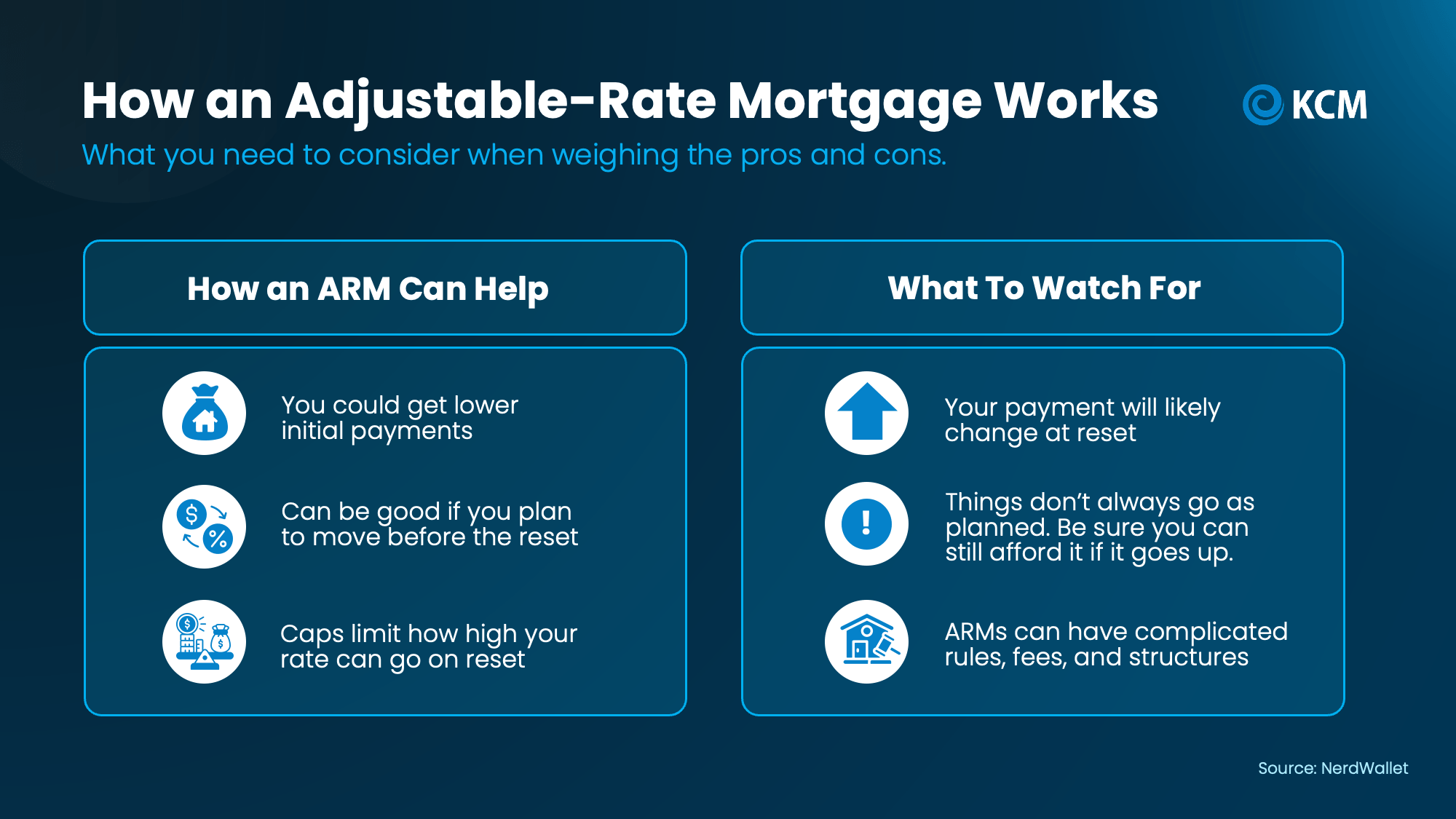
Rate caps: Limits help control how much the interest rate can change at each adjustment and over the life of the loan.
Other ARM options may have different introductory periods and adjustment schedules. That's why it's important to understand the specific loan you're being offered rather than assuming all ARMs work the same way.
Why Are More Homebuyers Considering ARMs?
The biggest reason is the potential for a lower starting interest rate.
According to Bankrate's mortgage rate research, adjustable-rate mortgages can offer lower introductory rates than traditional fixed-rate loans. The October 2026 Keeping Current Matters article cited a September comparison showing ARM rates more than a percentage point below fixed-rate loans. Depending on the loan and home price, that difference could translate into meaningful monthly savings during the introductory period.
The Mortgage Bankers Association also reported that roughly one in ten mortgage applicants were choosing an ARM in October 2026.
For someone looking to buy a home in Huntsville, Madison, or elsewhere in North Alabama, the lower initial payment may make certain properties worth considering.
But remember, those savings aren't guaranteed for the life of the loan. The rate can change after the introductory period, and so can your payment.
How Much Could an ARM Save on a Home in Huntsville?
Let's look at an illustrative example.
Suppose you're purchasing a $350,000 home with a 20% down payment, leaving a $280,000 mortgage. Here's how the starting monthly principal and interest payment could compare on a 30-year loan:
6% starting ARM rate: Approximately $1,679 per month
7% fixed mortgage rate: Approximately $1,863 per month
That's a difference of about $184 per month during the ARM's initial fixed-rate period.
Over the first year, that would amount to approximately $2,208 in lower principal and interest payments, assuming the stated rates and terms.
These are hypothetical rates for comparison, not current lender quotes or guaranteed savings. The example excludes property taxes, homeowners insurance, mortgage insurance if applicable, HOA fees, and closing costs. Actual ARM terms, fees, and payment changes will vary.
The real question isn't just how much you could save at the beginning. It's whether you could comfortably afford the payment if your rate increases later.
What Happens When an ARM Rate Adjusts?
Once the introductory period ends, the interest rate can change based on the loan's index and margin, subject to its adjustment caps. The Consumer Financial Protection Bureau's ARM guide explains how these adjustments work and what borrowers should review before choosing a loan.
That means your payment could increase, decrease, or stay relatively similar depending on the loan terms and market conditions.
Before choosing an ARM, ask your lender:
How long will my starting interest rate stay fixed?
How often can the rate change afterward?
What's the most my rate can increase at the first adjustment?
What's the maximum interest rate over the life of the loan?
What would my monthly payment look like at that maximum rate?
Are there differences in closing costs or other loan fees?
These questions matter because a lower initial payment shouldn't be the only factor in your decision.
When Might an ARM Make Sense for a North Alabama Homebuyer?
An ARM may be worth exploring if you have a clear financial plan and understand how the loan works.
For example, someone relocating to Huntsville for work might expect to stay in a home for a limited number of years. Another buyer might anticipate an increase in household income or have enough financial flexibility to manage a higher payment later.
However, plans can change. A job transfer may not happen, home values can fluctuate, and refinancing may not be available when you want it.
If you expect to stay in your home for many years or prefer a predictable mortgage payment, a fixed-rate loan may be more comfortable.
The best choice depends on your financial situation, how long you plan to own the home, and your tolerance for potential payment changes.
How ARMs Compare With Fixed-Rate Mortgages
Both types of loans have advantages, but they serve different needs.
A fixed-rate mortgage offers consistency. Your interest rate stays the same, making your principal and interest payment easier to plan around.
An ARM may offer a lower initial interest rate, but you take on the possibility of higher payments once the introductory period ends.
When comparing homes in Huntsville or Madison, ask your lender to calculate both options for the same purchase price and down payment.
Comparing the initial payment, total loan costs, and potential future payments can help you make a more informed decision.
Are Today's ARMs Different From Those Before 2008?
Yes. Mortgage lending rules have changed significantly since the housing crisis.
The federal Ability-to-Repay Rule generally requires lenders to make a reasonable, good-faith determination that borrowers can repay covered mortgage loans. Lenders must evaluate financial information rather than relying solely on an attractive introductory payment.
That doesn't mean every ARM is risk-free. Your interest rate and payment can still increase, and borrowers need to understand the terms of their particular loan.
An ARM should be evaluated based on its actual payment risks, not simply its reputation from years ago.
Frequently Asked Questions About Adjustable-Rate Mortgages
Is an ARM a good idea for first-time homebuyers?
It can be worth considering, but it depends on your finances and plans. First-time buyers should understand the introductory rate, adjustment caps, and maximum possible payment before choosing an ARM.
Can an adjustable-rate mortgage payment go down?
Yes. If the applicable index decreases, your interest rate may fall at an adjustment, subject to the loan's terms and limits. However, a decrease isn't guaranteed.
What does a 5/1 ARM mean?
It generally means the rate is fixed for the first five years and can adjust once per year afterward.
Can you refinance an ARM into a fixed-rate mortgage?
Potentially. Refinancing requires a new loan application and approval, and your eligibility will depend on factors such as income, credit, equity, and market conditions. There may also be closing costs.
Are ARMs available for homes in Huntsville and Madison?
Yes, adjustable-rate mortgages may be available through lenders serving North Alabama. Specific products, qualifications, rates, and terms vary by lender.
Could an ARM Be Worth Exploring for Your Next Home?
A lower starting mortgage rate could make a difference in your monthly budget, but understanding the long-term terms is just as important.
Before choosing a loan, talk with a trusted lender who can compare fixed-rate and adjustable-rate options using your actual numbers. That way, you'll know what the initial savings could look like and what risks you may need to prepare for.
If you're planning to buy a home in Huntsville, Madison, or the surrounding area, having a clear understanding of your financing options can also help you set a realistic home search budget.
Tracy DeGraaff | Rebecca Lowrey Group | RE/MAX Distinctive | Top 1% Nationally | 365+ Google Reviews | Huntsville, Madison & North Alabama Real Estate Specialists
Mortgage rates, loan terms, and eligibility vary. Payment examples are illustrative and do not represent a lender offer. Consult a licensed mortgage professional for personalized financing guidance. Market information reflects sources cited in October 2026 and may change.