If you already own a home in Huntsville, Madison, or North Alabama and you’re thinking about moving, your current home may play a bigger role in your next purchase than you realize.
You’ve probably heard that you should put 20% down when buying a home. But here’s the important part: 20% down is not required for many homebuyers. Depending on the loan program and your qualifications, you may be able to buy with much less.
Still, homeowners who are selling one home and buying another are often putting significantly more down than first-time buyers.
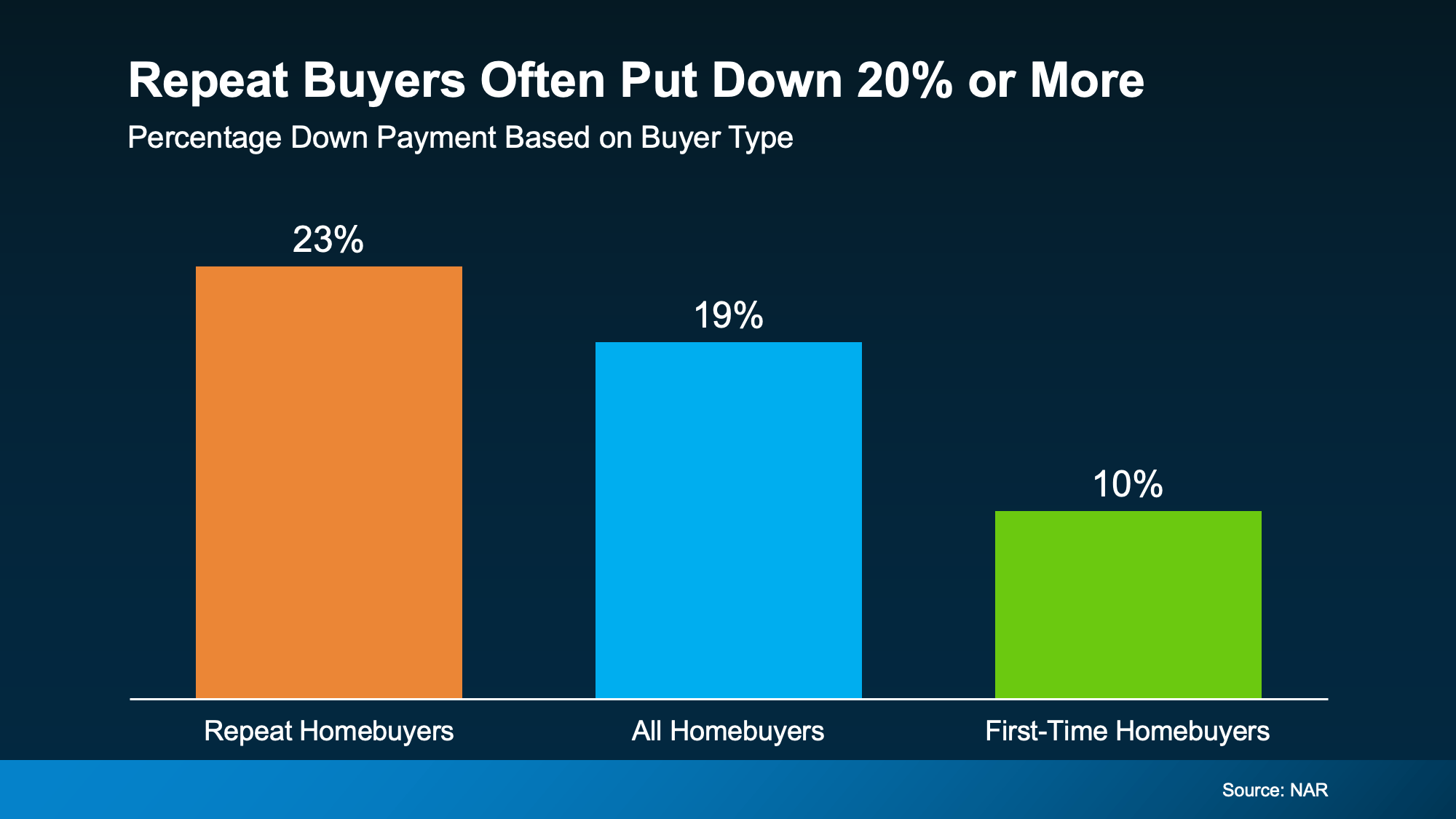
According to the National Association of REALTORS® 2025 Profile of Home Buyers and Sellers, the typical repeat buyer put 23% down, compared with 10% for a first-time buyer.
So, how are repeat buyers able to put more money down?
For many homeowners, the answer is the equity they’ve built in the home they already own.
Your Current Home Could Help Fund Your Next One
If you’ve owned your Huntsville-area home for several years, you may have been building equity without thinking much about it.
Equity generally grows in two ways. You pay down your mortgage over time, and your home may increase in value.
Your home equity is the difference between your home’s current value and what you still owe on it.
For example, if your home could sell for $450,000 and you owe $250,000 on your mortgage, you would have roughly $200,000 in equity before accounting for selling expenses and other costs.
When you sell, some of that equity may become cash you can use toward your next home.
That’s one reason homeowners who bought several years ago may have more options today than they realize, even if current mortgage rates have made them hesitant to move.
Repeat Buyers Are Putting More Money Down
The difference between first-time and repeat buyers is significant.
Data from the National Association of REALTORS® shows the typical repeat buyer puts 23% down, more than double the 10% down payment for the typical first-time buyer.
That doesn’t mean every current homeowner should put 20% or more down. But it does show how owning a home and building equity over time can change your buying power when you’re ready for your next move.
If you’re wondering whether you could afford your next home in Huntsville, Madison, Owens Cross Roads, or elsewhere in North Alabama, understanding how much equity you have is an important place to start.
Where Are Repeat Buyers Getting Their Down Payments?
For a first-time homebuyer, a down payment may come from savings, investments, gifts, down payment assistance, or a combination of sources.
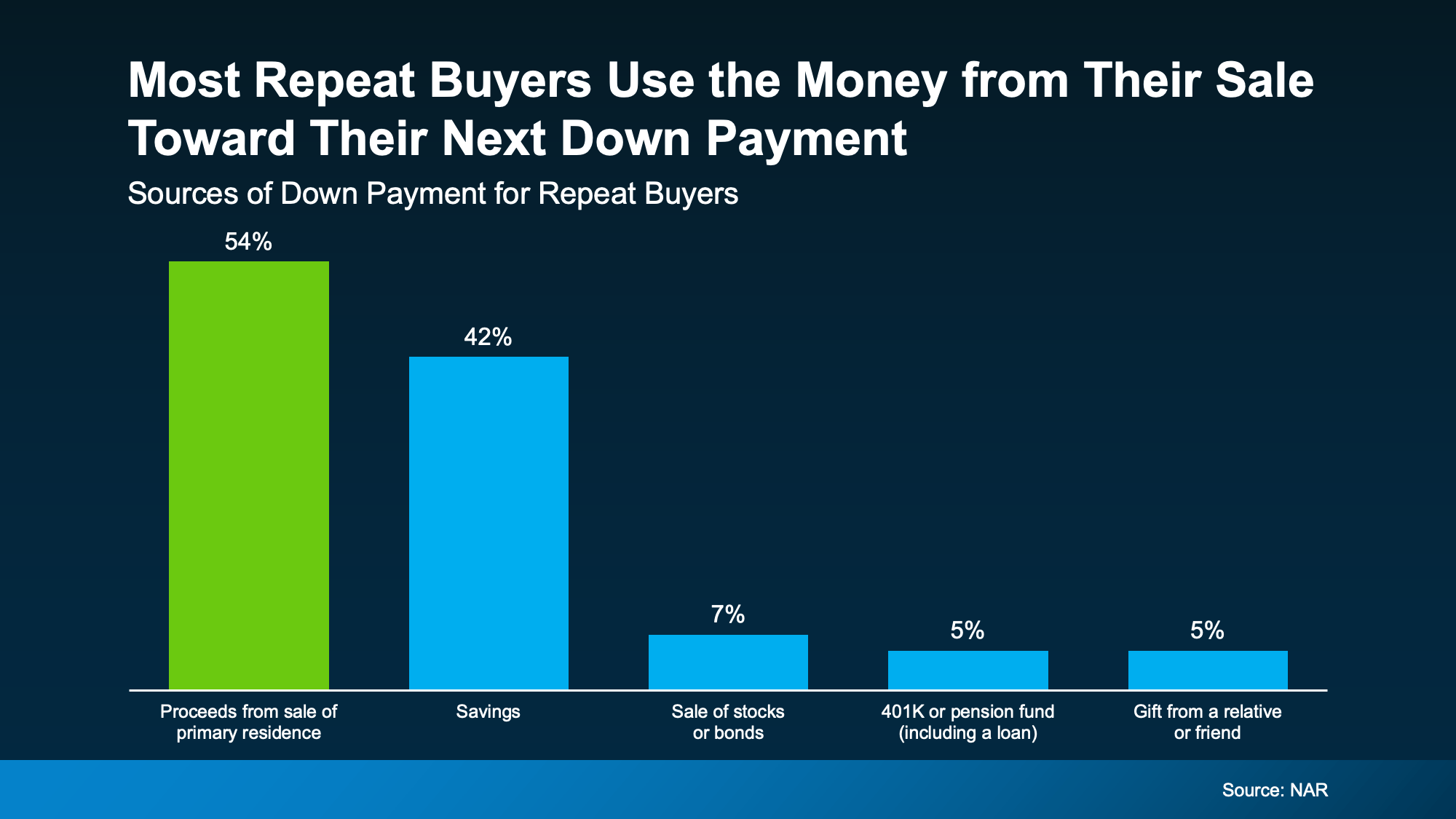
Current homeowners have another potential source: the proceeds from selling their existing home.
Research from the National Association of REALTORS® shows that proceeds from the sale of a previous home are a major source of down payment funds for repeat buyers.
After years of paying down a mortgage and potentially gaining home value, that equity can become part of the budget for the next purchase.
That can change the conversation considerably.
Instead of only asking, “How much do we have saved for a down payment?” current homeowners may also want to ask:
What could our current home sell for? How much do we still owe? And approximately how much equity could we carry into our next home?
Those questions are especially important if mortgage rates or monthly payments have been holding you back from considering a move.
What Are the Benefits of Putting 20% Down on a Home?
If your home equity makes a 20% down payment possible, there are several reasons it may be worth considering.
1. You Borrow Less Money
The more you put down, the less you need to finance.
For example, if you purchase a $500,000 home with 20% down, you would finance $400,000 before considering other loan details and costs. With 10% down, you would finance $450,000.
That smaller loan amount can affect both your monthly payment and the total amount of interest you pay over time.
2. Your Monthly Mortgage Payment May Be Lower
Because you’re financing less, a larger down payment can reduce the principal-and-interest portion of your monthly mortgage payment.
For homeowners who want to move but are concerned about taking on a higher monthly payment, using some of the equity from their current home may help make the numbers more manageable.
3. You May Be Able To Avoid Private Mortgage Insurance
If you use a conventional mortgage and put less than 20% down, you may also have private mortgage insurance, or PMI, included in your monthly housing costs.
Reaching a 20% down payment can allow many conventional borrowers to avoid that additional monthly cost.
Loan requirements vary, so a trusted lender can show you exactly how different down payment amounts would affect your financing.
4. A Larger Down Payment Can Strengthen Your Financial Position
Putting more money down means starting with more equity in your next home and borrowing less.
It can also be one part of the overall financing picture a seller considers when reviewing an offer. Redfin notes that a larger down payment can help signal stronger financing to a seller, although price, contingencies, financing terms, timing, and other parts of an offer matter too.
That doesn’t mean you should automatically put every available dollar toward your next home.
You’ll still want to consider emergency savings, moving expenses, repairs or updates, and your other financial goals before deciding how much cash to use for a down payment.
Do You Have To Put 20% Down To Buy a Home in Huntsville?
No. You do not need a 20% down payment to buy a home in Huntsville or North Alabama.
Freddie Mac notes that qualified buyers may have conventional loan options requiring as little as 3% down, and other loan programs have their own down payment requirements.
So, instead of asking:
“Do I have to put 20% down?”
A better question may be:
“What down payment makes the most sense for my next move?”
For someone who already owns a home, answering that question usually means looking at both sides of the move: the financing for your next home and the equity you may have available in your current one.
Could Your Home Equity Make Your Next Move More Affordable?
This is where homeowners can sometimes underestimate their options.
If you bought your home several years ago, the amount of equity you have today may look very different from when you purchased it.
Before deciding that moving isn’t possible because of home prices, mortgage rates, or the down payment you think you’ll need, find out what your current home may actually be worth.
Once you have an idea of your potential equity, a trusted lender can help you compare financing scenarios based on different down payment amounts.
And if your next move could include a newly built home, you can also explore new construction homes in Huntsville and North Alabama to see what options are available locally.
Bottom Line
You do not need 20% down to buy your next home.
But if you already own a home in Huntsville, Madison, Owens Cross Roads, or another North Alabama community, the equity you’ve built may give you the option to put more down than you could when you purchased your first home.
A larger down payment could mean a smaller mortgage, a lower monthly payment, less interest over time, and potentially no PMI on a conventional loan.
The first step is understanding what your current home could sell for and how much equity you may have available for your next move.
Frequently Asked Questions About Down Payments and Home Equity
Do I need 20% down to buy a house in Huntsville, Alabama?
No. Many qualified buyers can purchase a home with less than 20% down. Freddie Mac explains that some conventional loan programs allow qualified buyers to put as little as 3% down. The amount you need will depend on your loan program, financial qualifications, and property.
What is the typical down payment for someone who already owns a home?
According to the National Association of REALTORS® 2025 Profile of Home Buyers and Sellers, the typical repeat buyer put 23% down, compared with 10% for a first-time buyer.
Can I use the equity from my current home for the down payment on my next home?
Yes. When you sell your current home, the money remaining after paying off your mortgage and applicable selling expenses can potentially be used toward your next home. NAR research shows proceeds from the sale of a previous home are a major source of down payment funds for repeat buyers.
How do I know how much equity I have in my Huntsville home?
Start by estimating your home’s current market value and subtracting approximately what you still owe on your mortgage. Keep in mind that your equity is not necessarily the same as the amount you would walk away with after selling because closing costs, commissions, mortgage payoff amounts, and other expenses can affect your net proceeds.
Does putting 20% down eliminate PMI?
For many conventional mortgages, yes. Freddie Mac explains that PMI is typically required when a conventional borrower puts less than 20% down. Other loan types have different mortgage insurance and funding fee requirements.
Is putting 20% down always the best choice?
Not necessarily. A larger down payment can lower the amount you need to borrow, but it’s also important to consider how much cash you want to keep available for emergencies, moving expenses, home improvements, and other financial goals. A lender can help you compare different down payment scenarios before you decide.
Megan Salem | Rebecca Lowrey Group | RE/MAX Distinctive | Top 1% Nationally | 355+ Five-Star Reviews | Huntsville, Madison & North Alabama Real Estate Specialists
Information is current as of August 2026 and is provided for general educational purposes only. It is not intended as mortgage, financial, tax, or legal advice. Loan programs, qualification requirements, mortgage insurance, interest rates, and costs vary by borrower and lender. Consult a qualified mortgage professional about your specific financing options.