If you’re buying a home in Alabama, there’s a phrase you need to understand early in the process:
Buyer Beware.
For a lot of buyers, especially those relocating from out of state, that phrase sounds alarming. It can make people wonder:
Can a seller hide problems with the house?
Am I protected at all?
How am I supposed to know what I’m buying?
The good news is this: “Buyer Beware” does not mean buyers are helpless. But it does mean buyers need to be more proactive here than they might be in other states. In Alabama, buying a home is not just about finding the right floor plan or neighborhood. It is also about knowing what questions to ask, what inspections to order, and what risks to evaluate before closing.
That is where a knowledgeable local real estate team matters. At Rebecca Lowrey Group RE/MAX Distinctive, we help buyers across Huntsville, Madison, Athens, Decatur, Meridianville, and surrounding communities understand what to look for before they commit. For relocation buyers especially, this is one of the biggest legal and practical differences in the home-buying process here.
What “Buyer Beware” Actually Means in Alabama
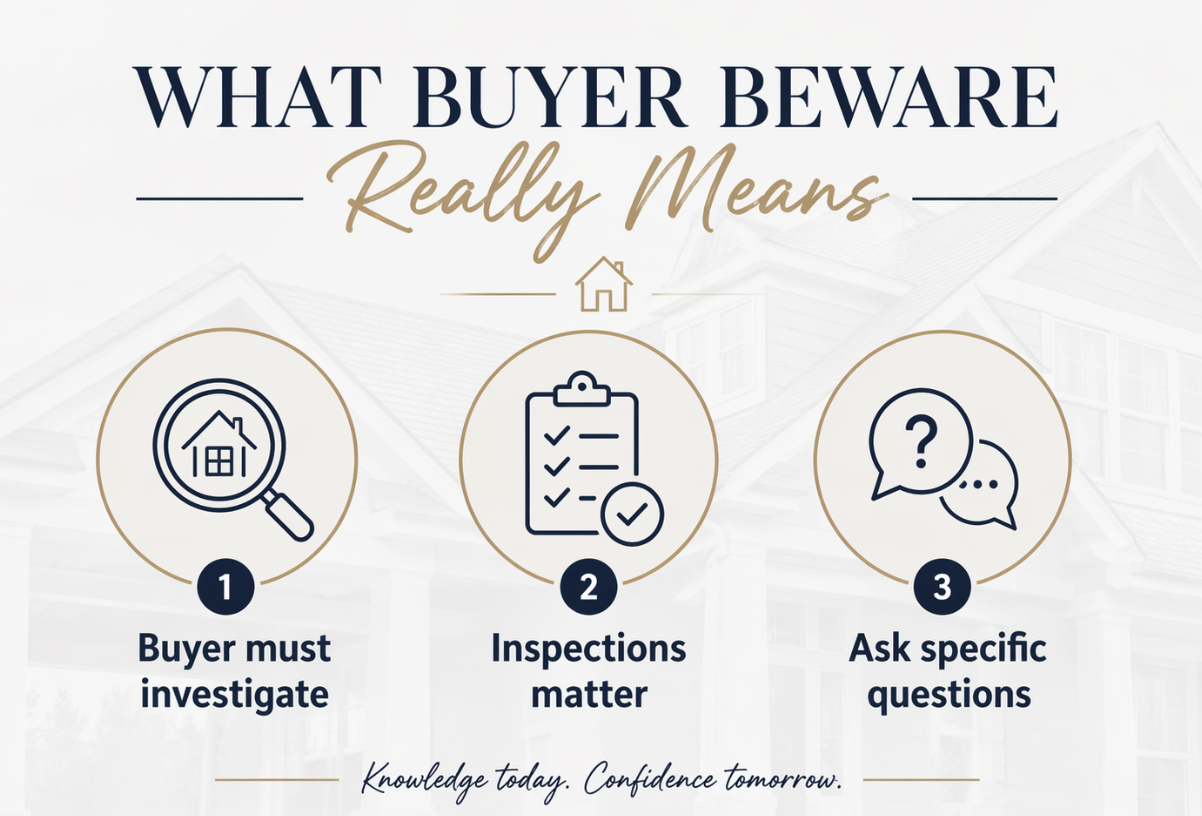
Alabama is generally considered a caveat emptor state in residential resale real estate. “Caveat emptor” is a Latin phrase that means let the buyer beware. In plain English, it means the buyer is responsible for investigating the condition of the property before purchasing it. The Alabama judicial system has recognized caveat emptor in the resale context, which is why due diligence matters so much here.
That does not mean a seller can freely lie or commit fraud. It does mean Alabama does not operate like some states where sellers routinely complete a long, detailed, mandatory disclosure form covering nearly every known condition issue.
Instead, the burden is much more heavily placed on the buyer to:
Inspect the property,
Ask direct questions,
Review documents carefully,
Evaluate whether the home is the right fit before closing.
This is one reason relocation buyers can get tripped up. They assume the process works the same way it did in the last state where they bought a home. In Alabama, that assumption can cost you.
A smart buyer treats the contract period like an investigation period, not just a countdown to closing.
What Sellers Still Have to Disclose
Even in a Buyer Beware state, there are still important limits.
A seller generally cannot actively misrepresent the property. And if a buyer asks a direct question, the seller is expected to answer truthfully. Alabama consumer-facing real estate guidance also emphasizes that buyers should understand agency relationships and the role of real estate professionals during a transaction.
In addition, Alabama case law has recognized exceptions in certain situations, including issues involving health or safety in some circumstances. That is one reason buyers should never stay vague. The more specific your questions are, the better.
For example, instead of asking:
“Is everything okay with the house?”
Ask questions like:
Has the roof leaked during the seller’s ownership?
Has there been standing water in the crawlspace?
Have there been any foundation repairs?
Has the HVAC system been replaced or repaired recently?
Has the property ever had mold remediation?
Are there any drainage issues after heavy rain?
The more specific you are, the harder it is for important information to stay buried.
Another important exception is lead-based paint. Federal law requires sellers of most pre-1978 homes to disclose any known information about lead-based paint and lead-based paint hazards before a contract is signed, and buyers must be allowed to conduct a lead inspection or risk assessment.
That means if you are buying an older home in Huntsville, Decatur, or another area with established housing stock, this is one more item that should absolutely be on your radar. A strong move here is to put buyer questions in writing through your agent so there is a record of the answers.
What Sellers Are Not Required to Volunteer
This is where many buyers misunderstand the process.
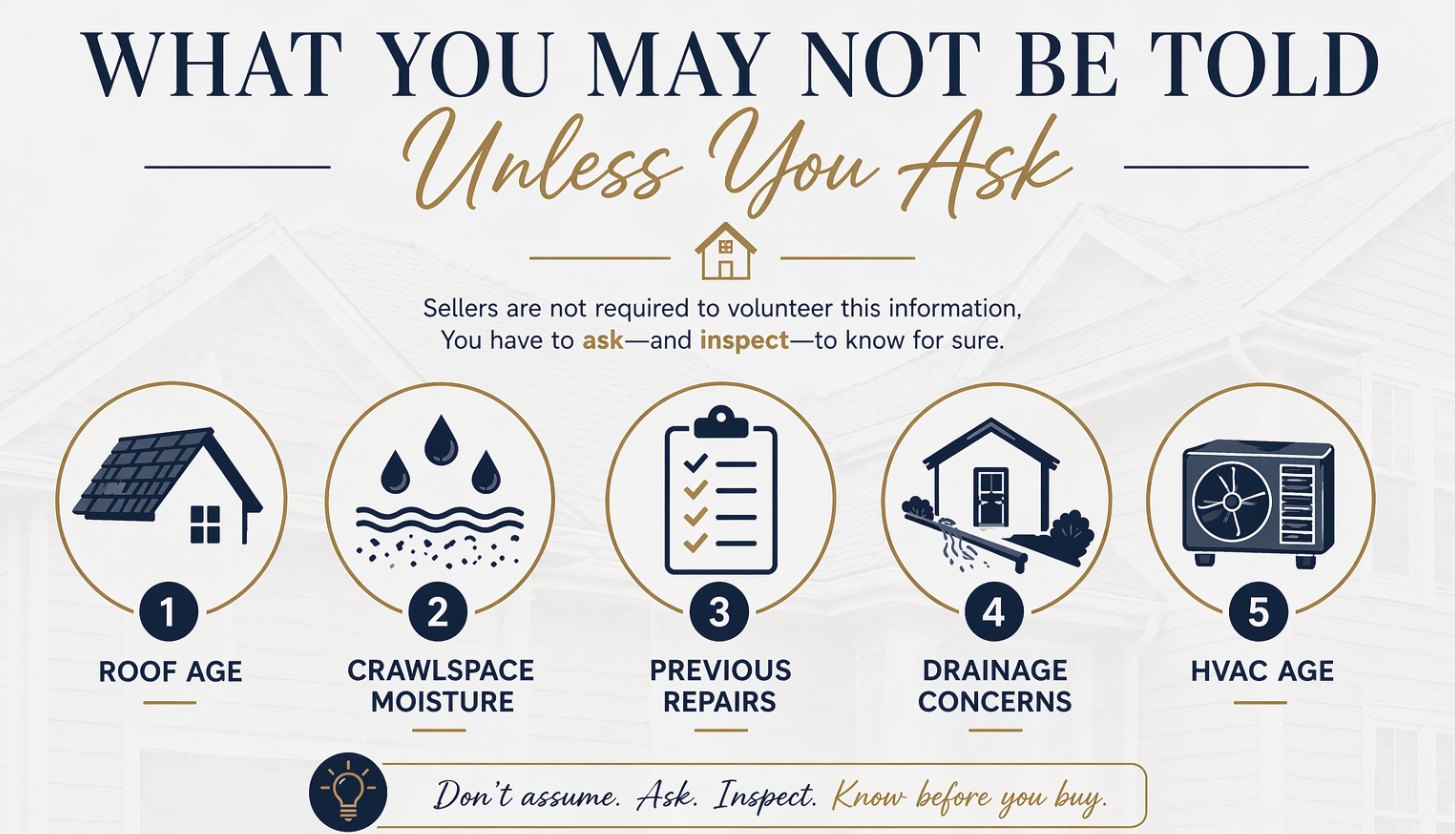
In Alabama resale transactions, sellers are generally not required to proactively volunteer every known issue or past repair, the way buyers might expect in other states. This is the practical effect of “Buyer Beware,” which places greater responsibility on the buyer to investigate the property. The Alabama Real Estate Commission explains that the Alabama Supreme Court has held caveat emptor to be the law in Alabama for existing residential properties.
That can include things like:
Older systems are nearing the end of their life
Prior repairs
Cosmetic defects
Drainage concerns that are not obvious on a sunny day
Maintenance items a buyer may not notice during a quick showing
That does not automatically mean anyone is being deceptive. It means buyers need to know what to ask and what to inspect.
This is especially important in a fast-moving market, where buyers can feel pressure to make decisions quickly. A beautiful kitchen, fresh paint, and strong staging can make people feel more comfortable than they should.
A polished home is not always a problem-free home.
A good rule: do not confuse “updated” with “well-maintained,” and do not confuse “looks fine” with “has been properly evaluated.”
The Biggest Risks Buyers Overlook
The homes that create the most regret are not always the ones with dramatic problems. Often, they are the homes with moderate but expensive issues that buyers did not fully understand before closing.
Some of the most common things buyers overlook include:
Roof condition and age
A roof may not be leaking today and still be near the end of its useful life. That matters because replacement is expensive, and insurers may also care about roof age.
Crawlspace moisture and drainage
In North Alabama, where humidity and rain patterns matter, this is not something to shrug off.
Foundation movement
Not every crack is a crisis, but some movement can signal larger issues. Buyers need context, not panic.
HVAC age and performance
The U.S. Department of Energy notes that regular maintenance helps extend the life of an air conditioner, and ENERGY STAR says one sign it may be time to replace heating and cooling equipment is when a heat pump or air conditioner is more than 10 years old, and the system needs frequent repairs. That does not mean every older unit needs immediate replacement. It does mean buyers should understand the age, condition, and repair history of the system before they buy.
Indoor air and hidden moisture issues
Buyers with allergies, asthma concerns, or young children should pay especially close attention to this. A wise buyer looks at major systems, moisture patterns, grading, ventilation, and long-term maintenance risk, not just finishes and aesthetics.
Why Inspections Matter So Much Here
If Buyer Beware sounds like extra responsibility, inspections are how buyers protect themselves.
A quality home inspection can surface issues involving:
Roofing
Electrical systems
Plumbing
HVAC
Structure
Drainage
Windows and doors
Signs of moisture intrusion
And in many situations, a general home inspection is only the starting point. Depending on the property, buyers may also want:
Termite inspection
HVAC evaluation
Roof inspection
Structural review
Additional moisture or mold-related follow-up
This is where experienced guidance matters. Not every home needs every specialist. But some absolutely need more than a standard inspection.
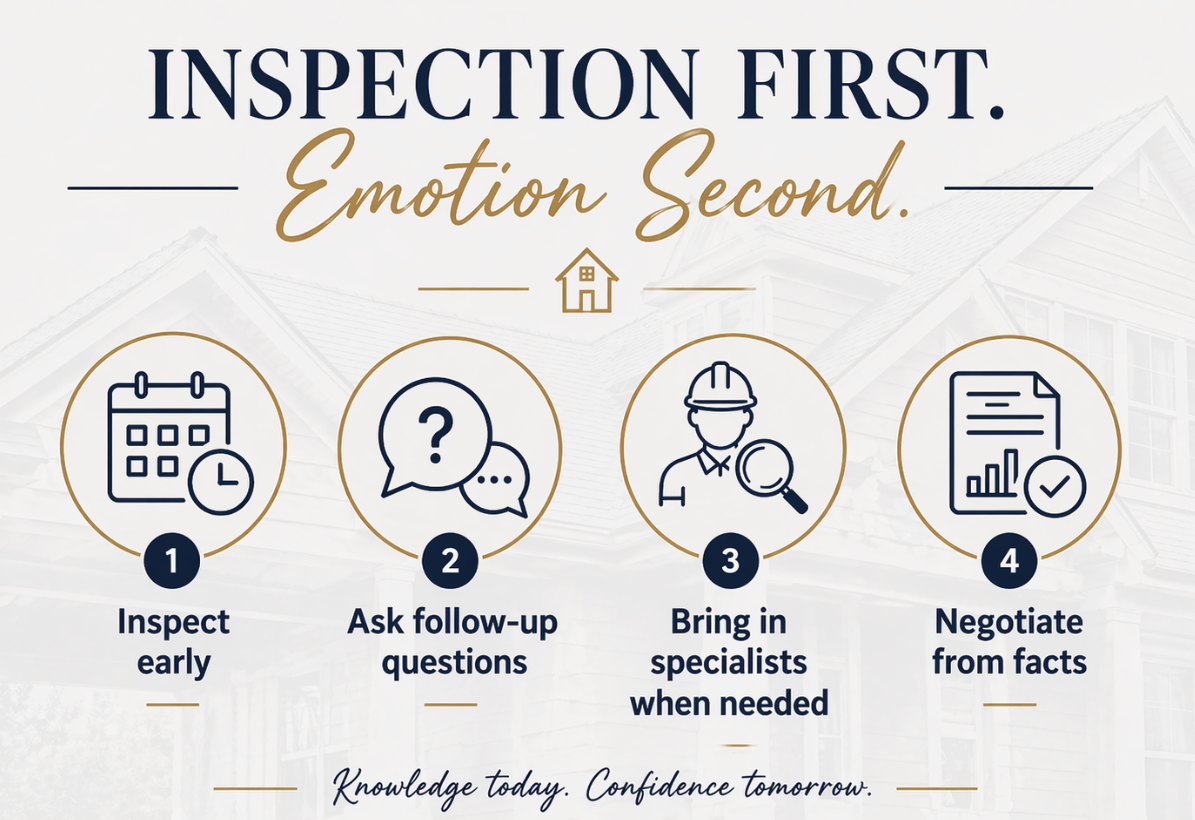
You also want enough contract time to:
Complete inspections
Review the reports
Get specialist opinions if needed
Decide whether to negotiate repairs, ask for credits, or walk away
That window matters. A smart move many buyers skip: attend the inspection in person if possible. You will usually learn far more by walking through issues with the inspector than you will by only reading the report later.
Why the Right Real Estate Team Makes a Bigger Difference in Alabama
In a state where buyers need to be more proactive, the real value of a strong real estate team becomes even more obvious. At the Rebecca Lowrey Group RE/MAX Distinctive, this is not just about opening doors and writing offers. It is about helping buyers think strategically.
That includes helping buyers:
Ask better questions
Spot red flags
Understand inspection findings
Negotiate repairs or credits
Avoid rushing into a home that is not the right fit
That is especially important for buyers relocating to the Huntsville area who may not know common local construction styles, neighborhood drainage patterns, crawlspace concerns, or the difference between an older home issue that is manageable versus one that should make you pause. A good local team helps you buy with your eyes open. One of the biggest advantages of working with the right team is this: you do not just get help finding a house. You get help evaluating the decision.
Is Buyer Beware Always a Negative?
Not necessarily.
Buyer Beware is intimidating when people do not understand it. But informed buyers can still navigate the process very successfully.
In fact, buyers who do their homework often make stronger decisions because they are forced to slow down, inspect carefully, and negotiate based on facts instead of assumptions.
The key is not to fear the process. The key is to respect it.
That means:
Do not skip inspections casually
Do not leave questions unasked
Do not assume “no news” means “no issues”
Do not buy based only on emotion
Homes are expensive. Clarity matters. A good lens for buyers is this: the goal is not to find a perfect house. The goal is to understand the house you are buying.
FAQ: Buyer Beware in Alabama
What does Buyer Beware mean in Alabama real estate?
Do sellers have to disclose everything?
Can a seller lie if I ask a direct question?
They should answer truthfully. That is one reason buyers should ask clear, specific questions rather than vague ones.
Are there any required disclosures?
Yes. One major example is lead-based paint disclosure for most pre-1978 homes under federal law.
Should I always get a home inspection?
For most buyers, it is one of the most important protections in the process. In a Buyer Beware state, inspections are even more important because the buyer’s investigation carries so much weight.
What issues should buyers pay special attention to?
Roof age, crawlspace moisture, drainage, HVAC condition, structural movement, and indoor air quality concerns are all important areas to evaluate. EPA and DOE guidance both reinforce the importance of moisture control and proper system maintenance.
The Bottom Line
Buyer Beware in Alabama does not mean you are on your own.
It means you need to be intentional.
Ask better questions
Inspect thoroughly
Review the facts
Work with professionals who know what to look for
That is how buyers protect themselves. And that is how you make a smart move with confidence. If you are buying in Huntsville or anywhere in the surrounding area, having the right local guidance can make the process clearer, smoother, and far less stressful.
Buying a home in Huntsville or the surrounding area? Get the guidance, local insight, and strategy you need to move forward with confidence.
Tracy DeGraaff | Rebecca Lowrey Group | RE/MAX Distinctive
Top 1% Nationally | 345+ Five-Star Reviews
Huntsville, Madison & North Alabama Real Estate Specialists
Information is current as of April 2026 and is provided for general informational purposes only. Alabama follows “buyer beware” principles in many resale transactions, meaning buyers are responsible for investigating property conditions. This content is not intended as legal, financial, or tax advice. Rebecca Lowrey Group does not guarantee property condition or third-party vendor performance. Buyers should conduct thorough inspections and consult licensed professionals before making a purchase decision.