Huntsville has emerged as one of the Southeast's most promising real estate investment markets. Whether you're a first-time investor, building a portfolio, or exploring out-of-state opportunities, this guide covers everything you need: the economics driving growth, best neighborhoods for ROI, how to analyze deals, and critical mistakes to avoid.
Why Huntsville?
Three big reasons:
#1: Economic growth. Huntsville is home to Redstone Arsenal, NASA's Marshall Space Flight Center, and Cummings Research Park—the second-largest research park in the country. We're talking about stable, high-paying jobs that aren't going anywhere.
Then you've got the Mazda Toyota Manufacturing plant that brought thousands more jobs to the region, and we’ll soon be home to the U. S. Space Command. Overall, Huntsville added 8,200 jobs in the year ending April 2024, expanding the employment base 3%—more than double the U.S. average of 1.3% (source: https://www.realpage.com/analytics/huntsville-apartment-inventory-explodes/ )
#2: Population growth. Huntsville's population grew 20% between 2010 and 2020 (source: City of Huntsville Census Data). People are moving here for work, and they need places to live. That creates consistent rental demand.
#3: Affordability compared to other markets. Investment-grade properties in Huntsville range from:
Entry-level: $250K-300K (South Huntsville, older neighborhoods)
Mid-range: $300K-400K (Madison, established areas)
Premium: $400K-500K+ (Madison, newer construction, Hampton Cove)
Try doing that in Nashville or Atlanta.
Important note on vacancy: While apartment construction has increased overall vacancy rates, single-family homes in desirable neighborhoods maintain 4-5% vacancy—significantly better than multi-family. This creates an opportunity for investors focused on single-family properties. The fundamentals are strong. Now let's talk about where to actually buy.
Is Investment Property Only for Big Investors?
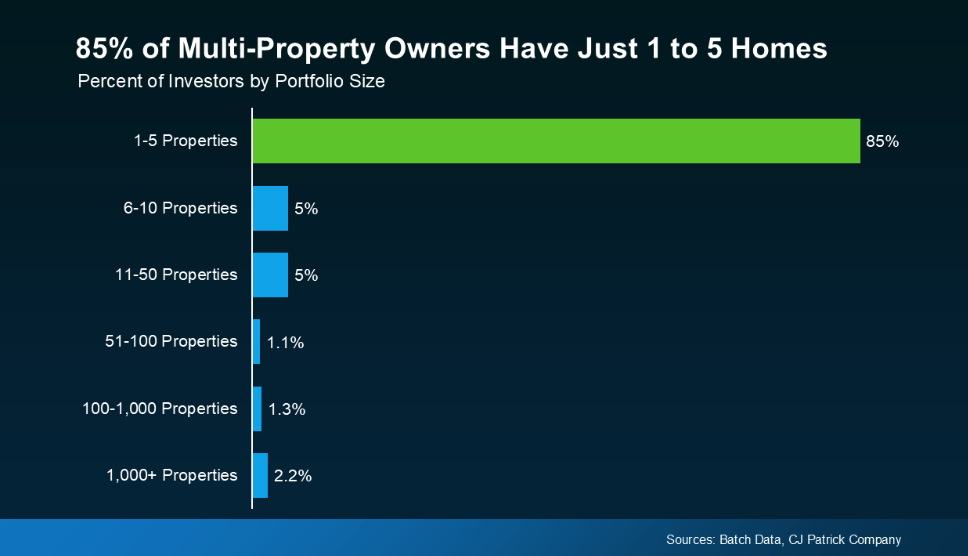
Data shows 85% of investors who own multiple homes have just one to five properties. Most investors are not large hedge funds. They are professionals building long-term wealth one property at a time.
https://nationalmortgageprofessional.com/news/small-investors-dominate-single-family-home-market
Best Neighborhoods for Investment Properties
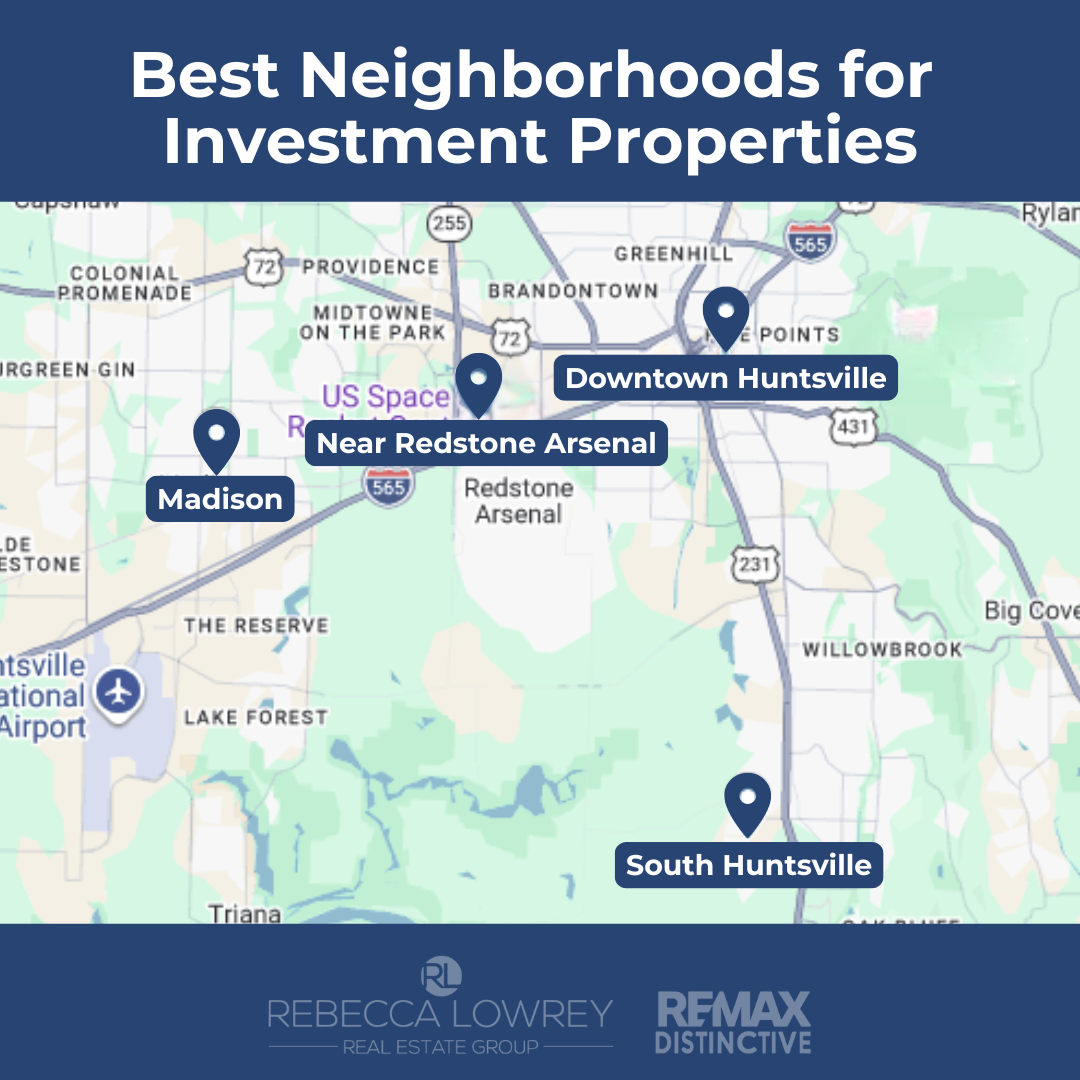
Not all Huntsville properties or neighborhoods are created equal for investors. Today, we’re focusing on single-family homes in areas that deliver for investors. Here are our top picks:
South Huntsville
This is your affordable entry point for single-family homes. You can find solid 3-bedroom homes in the $200K-300K range that rent for $1,600-1,900 a month.
The cap rates here are typically 5.5-6.5% (watch for HOA fees that can reduce this). Good for cash flow, moderate appreciation.
Tenant base: Working professionals, small families, generally stable.
Madison
If you want to go a bit higher on price point—$300K-450K range—Madison delivers strong appreciation and excellent tenant quality.
Schools are top-rated here, so you're attracting families who stay longer. Less turnover means lower vacancy costs.
Rental rates: $2,000-2,500 for a 3-4 bedroom home.
Near Redstone Arsenal
This is interesting because you've got built-in rental demand from military personnel. The downside? PCS cycles mean more frequent turnover—about every 2-3 years.
The upside? Consistent demand. There's always someone looking.
Rental rates here: $1,800-2,200 depending on size and proximity to gates.
Downtown Huntsville
If you're looking at condos or multi-family, downtown is where young professionals want to be.
Condo prices: $180K-350K, renting for $1,200-1,800/month.
Watch your HOA fees though; they can eat into your cash flow.
Financial Analysis & ROI Expectations for a North Alabama Investment Property
Purchase price ranges by neighborhood, but the median list prices for homes in various areas are shown below:
Huntsville: $374,900 (as of 2/26/2026)
Madison: $487,000 (as of 2/26/2026)
Meridianville: $329,900 (as of 2/26/2026)
New Market: $304,900 (as of 2/26/2026)
Average rental rates for three bedroom/two bath single family homes in 2026 are $1,500/month in Huntsville; $1,795 in Madison; $1,845 in Meridianville; and $1,645 in New Market.
Quick Reference: Understanding ROI Metrics. Before we dive into the numbers, here are the three financial metrics every investor needs to know:
Start with Net Operating Income (NOI)—this is your annual rental income minus operating expenses like property taxes, insurance, maintenance, property management, and HOA fees. Critically, NOI excludes your mortgage payment because it measures the property's performance independent of how you financed it.
Next, Cap Rate (Capitalization Rate) is calculated by dividing NOI by purchase price. A $300,000 property generating $18,000 in NOI has a 6% cap rate. This metric lets you compare properties objectively—a 6% cap rate property in South Huntsville performs the same as a 6% cap rate property in Madison, regardless of price.
Finally, Cash-on-Cash Return measures your actual return on invested capital by dividing annual cash flow (after all expenses, including the mortgage) by total cash invested (down payment + closing costs + repairs). If you put $80,000 down and receive $6,000 annual cash flow, that's a 7.5% cash-on-cash return. Here's why both metrics matter: a property might have a modest 5.5% cap rate but deliver a 15% total return when you factor in leverage (the mortgage), appreciation, principal paydown, and tax benefits. In Huntsville, expect cap rates of 5-7% depending on neighborhood, with total annual returns often reaching 12-18%.
Tax considerations (property taxes by area): Alabama has some of the lowest property taxes in the nation, averaging 0.33% vs. 1.07% nationally. Specific examples include Huntsville: ~0.33% of market value, and Madison: ~0.40% of market value.
Insurance costs: Landlord insurance in Alabama averages approximately 0.4-0.6% of property value annually, according to insurance industry data. For Huntsville investment properties, this translates to:
$250,000 property: $1,000-$1,500/year ($85-125/month)
$300,000 property: $1,200-$1,800/year ($100-150/month)
$400,000 property: $1,600-$2,400/year ($135-200/month)
$500,000 property: $2,000-$3,000/year ($165-250/month)
These costs are significantly lower than many coastal or high-risk areas, making Alabama attractive for real estate investors. However, landlord policies run 25-40% higher than standard homeowners insurance due to: Liability coverage for tenant injuries, Loss of rental income protection, Property damage from tenant negligence, Legal expenses for evictions, among other possible complications.
Factors that can reduce your premium: Newer construction (post-2010); Brick or masonry construction; Updated electrical, plumbing, HVAC; Security system; Smoke detectors and fire extinguishers; Higher deductible selection.
Alabama's relatively low insurance costs compared to tornado-prone regions or coastal flood zones make Huntsville particularly attractive for investors concerned about operating expenses. Actual costs vary by property specifics, coverage limits, and insurer—obtain multiple quotes for accurate pricing.
Realistic appreciation expectations: Huntsville has averaged 7.6% annually over the past decade, though the market has normalized to more sustainable 3-5% growth in recent years (source: NeighborhoodScout).

Financing Investment Properties in Huntsville
Securing the right financing is crucial to your investment success. Here's what you need to know about financing options for Huntsville investment properties.
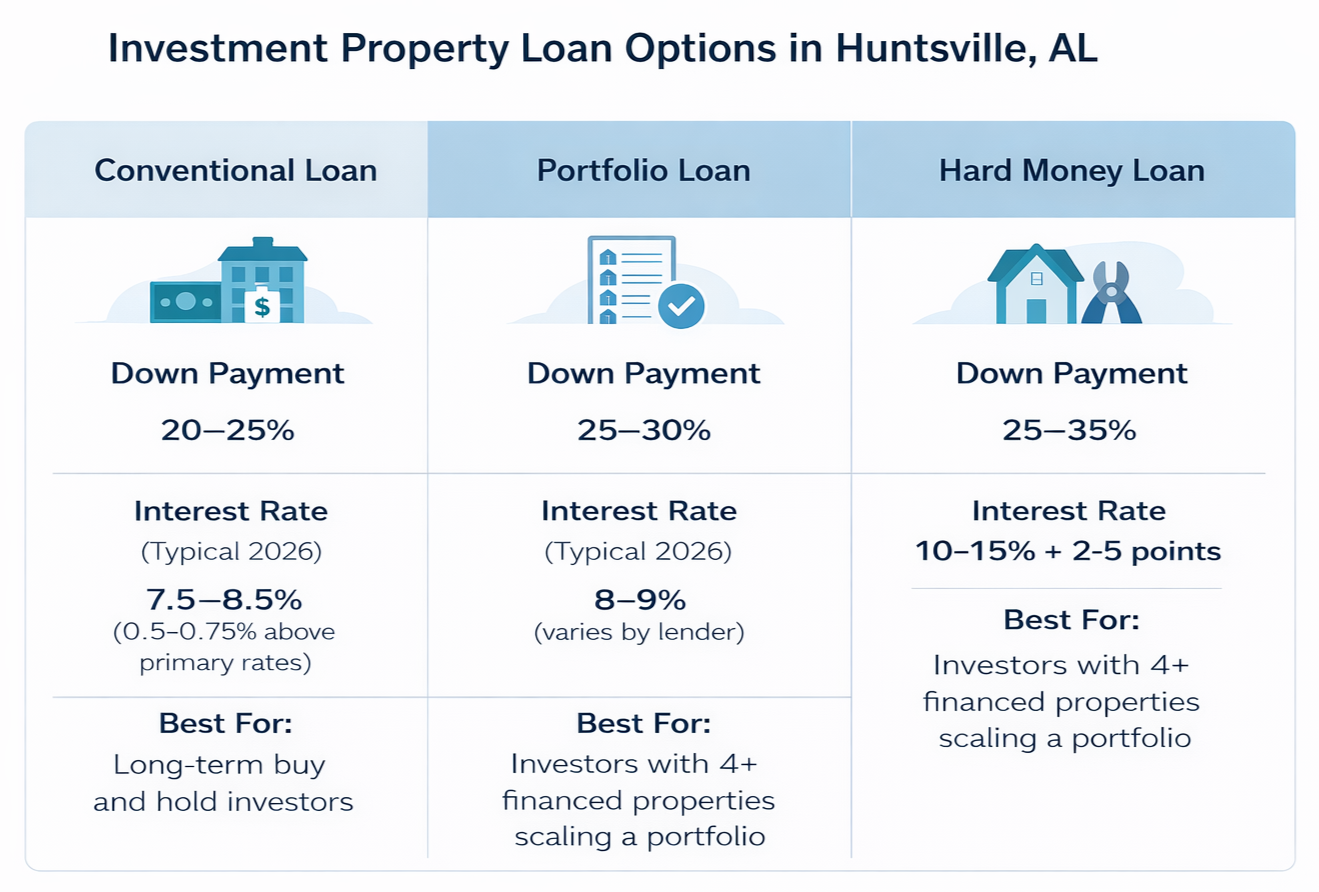
Conventional Loans: The Standard Route
Most investors start with conventional loans through traditional banks and mortgage lenders—your best option for long-term buy-and-hold properties.
Key Requirements:
Down payment: 20-25% (vs. 3-5% for primary residences)
Interest rates: 0.5-0.75% higher than owner-occupied (expect 7.5-8.5% in 2026)
Cash reserves: 6 months of mortgage payments required
Loan limits: $806,500 for single-family homes in Alabama (2026)
Portfolio Loans: Scaling Beyond 4 Properties
Once you own 4+ financed properties, you hit conventional lending limits. Portfolio loans solve this problem. These loans are held by the lender, not sold to Fannie/Freddie. They may come with slightly higher interest rates (+0.25-0.5%) and larger down payments (25-30%). They are usually available through local and regional banks or credit unions, and offer more flexible underwriting for experienced investors. Pro tip: Build relationships with local community banks early. Banking relationships open doors when you need portfolio financing.
Hard Money Loans: For Fix-and-Flip Only
This product is a short-term, asset-based loan designed for properties that need work and won't qualify for conventional financing. Typical interest rates can range from 10-15%, with 2-5 points paid upfront. Loan-to-value ratio will range from 65 to 75% of the after-repair value, and the loan term will range from six to 18 months, with a down payment of 25-35%. Cost Reality: A $200K purchase costs roughly $17,000 in interest and points for a 6-month hold. Only use when the deal justifies the cost. The right financing strategy makes scaling possible. Take time to understand your options and structure your finances for growth.
The Buying Process for Out-of-State Investors
Investing in Huntsville from California, Texas, New York, or anywhere outside Alabama is absolutely viable—but requires the right systems and team.
Working with a Local Agent: Non-Negotiable
Who you work with matters: A Huntsville-based agent understands nuances that out-of-state investors can't see from afar. Madison vs. South Huntsville aren't just different price points—they're completely different tenant pools, rental demands, and investment strategies. Your agent should know which neighborhoods have military tenant turnover, where school boundaries impact rent premiums, and which areas are seeing new apartment construction that could affect your rental demand.
Virtual Tours and Video Walkthroughs
You don't need to fly to Huntsville to buy properties, but you do need eyes on the ground.
Effective virtual process: Request live video walkthroughs via Zoom or FaceTime where your agent walks through the property while you watch in real-time. This beats pre-recorded videos because you can ask questions: "Show me that crack in the foundation again," or "What's the neighborhood like two streets over?"
What to request:
Live walkthrough with your agent narrating
Video of the surrounding neighborhood at different times
Close-ups of major systems (HVAC, water heater, roof condition)
Photos of any concerning areas
Google Street View won't show you everything—ask your agent to drive the area
Property Inspection: Never Skip This
This is your most important safeguard. That $500 inspection fee is the best investment you'll make.
Choose inspectors who provide detailed photo reports
Request a video walkthrough during inspection
Have your agent attend the inspection and send real-time updates
Get contractor estimates for any repairs identified
Budget 20-30% contingency above estimates
The inspection protects you from buying someone else's expensive problem. Always include inspection contingencies in your offer, regardless of how competitive the market is.
Due Diligence You Can Do Remotely
Before making an offer, verify from your home office:
Property taxes: Check Madison County Tax Collector website
Crime statistics: Use CrimeReports.com for neighborhood safety data
Rental comps: Call 2-3 local property managers to validate rent assumptions
HOA documents: Review for rental restrictions and financial health
School ratings: Check GreatSchools.org (impacts tenant quality)
Flood zones: Verify FEMA flood maps
Google Earth: Check property boundaries, lot size, and the surrounding area
Closing Remotely
You'll never need to visit Huntsville to close. Most closing attorneys offer to coordinate a mobile notary that comes to you in your home state, or a Digital closing that allows you to sign electronically (increasingly common). Alternatively, they may offer a mail-away closing, with documents sent via overnight mail
Critical: When wiring funds, ALWAYS call the title company directly using a number you looked up independently—never trust wiring instructions sent via email (wire fraud is common).
Property Management: Your Most Important Decision
As an out-of-state investor, professional property management is essential.
Start interviewing property managers during your property search, not after closing. They can:
Validate rental rate assumptions during due diligence
Conduct the final walkthrough if you can't attend
Take possession of keys at closing
Begin marketing immediately
Handle all tenant interactions
Expect to pay 8-10% of the monthly rent plus leasing fees. This isn't optional—it's the cost of investing remotely while maintaining your sanity. Your property manager becomes your eyes, ears, and hands on the ground.
Timeline for out-of-state buyers:
Weeks 1-3: Build team (agent, property manager, lender, inspector)
Weeks 4-6: Property search via virtual tours
Week 7: Make an offer with contingencies
Weeks 8-9: Inspection, due diligence, negotiate repairs
Week 10: Remote closing, property management setup
Remote investing works when you build the right team first. Don't shortcut the team-building process to chase a property—the team determines your long-term success.
Common Mistakes to Avoid
Underestimating expenses. That 1% rule you may have heard about? It's not enough in today's market. Budget 1.5-2% of property value for annual maintenance, plus property management, plus vacancy.
Ignoring HOA restrictions on rentals. Many neighborhoods have a limit on the number of homes that can be rented. Make sure you review the covenants & restrictions for any neighborhood where you want to invest.
Skipping the inspection. You might think you’ll save $500. But that "small roof repair" becomes $15K when you actually get up there. Investment properties need THOROUGH inspections. You won't be living there to notice problems.
Overleveraging. If you buy too many properties without adequate reserves, you could find yourself in a bind. If you want a portfolio of properties, plan to scale slowly to ensure positive or neutral cash flow.
Poor tenant screening. Be sure you have a way to do credit checks, background checks, employment verification, income verification, and eviction history searches.
Not factoring in vacancy rates. 5-8% is realistic, and the Huntsville average is approximately 5%.
Getting Started Checklist
Market Research & Education
Read market reports, neighborhood guides, and rental data
Join Huntsville real estate investor groups on Facebook
Study school ratings, crime statistics, and employment data
Identify 2-3 target neighborhoods based on budget and goals
Assemble your professional team
Real Estate Professional
Lender
CPA
Attorney
Property Management Company
Financial Planning
Determine the exact budget
Calculate minimum acceptable ROI
Plan for 6-12 months of cash reserves per property
Set up LLC or ownership structure with attorney & CPA guidance
Property Search
Share detailed search criteria with your real estate agent
Review search results
View properties in person or virtually
Property Evaluation
Review rental comps and financial projections
Run ROI Calculations in each property
Narrow to 2-3 top prospects
Due Diligence Prior to Offer
View the neighborhood at different times of day (in person or virtually)
Check crime statistics online
Review Google Earth/Street View
Verify property taxes
Review HOA documents if applicable
Ask the chosen property manager to validate rental rates
Make an offer
Based on comps, create a competitive offer
Include an inspection contingency (ALWAYS)
Include an appraisal contingency
Consider an earnest money amount that shows you are serious
Include remote closing provisions if applicable
Inspections & Negotiating Repairs
Schedule your inspection immediately upon acceptance
Request the inspector do a video walkthrough during the inspection
Have the agent attend the inspection and send you photos/videos if you can’t attend in person
Get repair estimates
Consult with the agent and submit a request for repairs to the seller
Closing
Coordinate with the closing attorney’s office for remote closing options
Secure property insurance
Review the closing disclosure 3 days before closing (if you are getting a mortgage)
Wire funds (NEVER based on email instructions; always call to verify)
Sign documents
Receive keys and ownership documents
Transfer utilities to the property manager or keep them in your name
Property Management Set Up - If you have chosen to use a property management company, they should have an onboarding checklist to help you transition the property into their system.
Resources and Tools
Whether you are buying from a distance or planning to do everything in person, the bottom line for all real estate purchases is, “Everything needs to be in writing.” All preferences and decisions should be documented by email or in a written agreement.
If you are not local to Huntsville, a virtual meeting platform of your choice will help. The most popular options include Google Meet, FaceTime, and Zoom.
Research sites like GreatSchools.org, CrimeReports.com, and the Madison County GIS and Assessor sites will be valuable resources.
If you are using a property manager, they will likely set up a portal for you to monitor all aspects of your investment property, but you will also want to have an expense tracking platform (ex, QuickBooks).
Frequently Asked Questions About Investing in Huntsville Real Estate
Is Huntsville a good place to buy rental property?
Yes. Huntsville offers strong job growth, population growth, and relatively low property taxes, making it attractive for long-term investors.
What is the average cap rate in Huntsville?
Most single-family investment properties range from 5–7%, depending on neighborhood and price point.
How much do you need down for an investment property in Alabama?
Most conventional lenders require 20–25% down for non-owner-occupied properties.
Huntsville's investment potential
Now that you know the answers to your burning questions about investing in Huntsville real estate, are you ready to analyze your first Huntsville investment property?
Take the first step to buying: Schedule a free investment property consultation with our team. We'll help you run the numbers, identify the best neighborhoods for your budget, and create a personalized investment strategy.
Amanda Holifield | Rebecca Lowrey Group | RE/MAX Distinctive
Serving Huntsville, Madison, North Alabama, and the Tennessee Valley